When the Multiplier Becomes the Trap: The Psychological and Mathematical Reality of Leveraged Crypto Trading
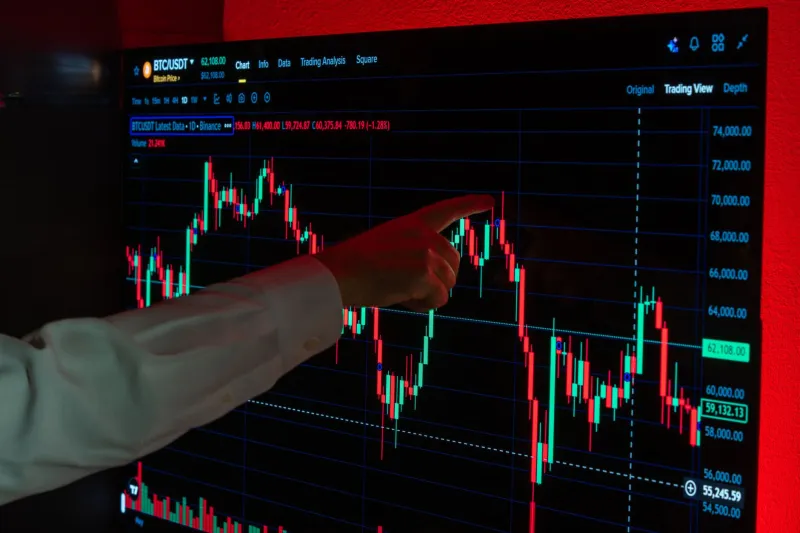
There is a particular kind of confidence that arrives with a 5x leverage position. The math appears clean, almost elegant: a 10% move in your favor becomes a 50% gain on deployed capital. For a retail investor staring at a bullish chart pattern at midnight, that arithmetic feels less like speculation and more like inevitability. It rarely is.
Leveraged trading in cryptocurrency markets has produced some of the most dramatic wealth transfers in the history of retail finance — and the flow has moved, overwhelmingly, away from individual traders. Understanding why requires looking beyond the mechanics of margin itself and into the behavioral and statistical architecture that makes leverage so reliably destructive for the majority who use it.
The Seduction of Asymmetric Upside
Human beings are not naturally calibrated to assess compounding risk. We are, however, exceptionally responsive to vivid narratives of upside. When a trader hears that a colleague turned a $2,000 position into $11,000 over a weekend using 5x leverage on a Bitcoin breakout, the emotional imprint of that story vastly outweighs any abstract warning about liquidation risk.
This is not a character flaw — it is cognitive architecture. Behavioral economists refer to this as availability bias: the tendency to assign greater probability to outcomes that are easily recalled or emotionally resonant. In crypto trading communities, stories of leveraged wins circulate loudly. Stories of total account liquidation are shared far less frequently, and when they are, they tend to be framed as anomalies rather than statistical norms.
The result is a persistent distortion in how retail traders perceive their own probability of success. Most entering a 5x leveraged trade genuinely believe they are among the minority who will manage it correctly. The data suggests otherwise.
What the Liquidation Numbers Actually Show
On any given high-volatility day in the crypto market, liquidation trackers routinely report hundreds of millions of dollars in forced position closures across major exchanges. During the significant market dislocations of 2021 and 2022, single-day liquidation events exceeded $1 billion. These are not outlier scenarios — they are recurring features of a market where leveraged retail participation is structurally high.
The mechanics behind these numbers deserve careful examination. When a trader opens a 5x leveraged long position, they are effectively borrowing four dollars for every one dollar of their own capital. The exchange holds their original capital as collateral. A price decline of just 20% — entirely normal volatility in crypto markets — is sufficient to trigger full liquidation at 5x. The trader loses their entire collateral. The borrowed funds are returned to the lender. The exchange collects fees throughout.
At 10x leverage, that liquidation threshold compresses to a 10% adverse move. In a market where 10% intraday swings are not uncommon, the trader is not speculating on direction so much as betting on timing precision to a degree that borders on the unrealistic.
The Compound Effect of Forced Exits
What makes leveraged liquidation particularly destructive is not simply the single loss — it is what follows. A trader who loses 100% of the capital allocated to a leveraged position does not merely absorb a setback. They face a series of cascading psychological and financial pressures that experienced risk managers describe as the revenge trading cycle.
Consider a representative pattern: a trader with a $10,000 account allocates $3,000 to a 5x leveraged position on a mid-cap altcoin. The position is liquidated during a sudden 22% price drop. The trader, now holding $7,000, feels the pull to recover the loss quickly. They re-enter with $4,000 — a larger allocation than before, rationalized as a necessary correction to recoup losses faster. A second adverse move liquidates this position as well.
In under 48 hours, the account has dropped from $10,000 to $3,000. The trader has not made irrational decisions in isolation — each choice felt logical in the moment. The problem is that leverage compresses the margin for error to a point where even sound directional analysis becomes insufficient. A trader can be correct about the long-term trajectory of an asset and still be liquidated if the short-term path moves against them before the position can breathe.
Experienced Traders Are Not Immune
There is a tempting assumption that the leverage trap primarily catches novice traders — that experience and technical sophistication provide meaningful protection. The evidence for this is weak.
Several well-documented cases from the 2022 crypto market contraction involved traders with years of experience and substantial track records. The common thread was not ignorance of risk — it was overconfidence born from a sustained period of success in a trending market. When conditions had been favorable for an extended time, position sizing discipline eroded. Stop-loss thresholds were widened. Leverage ratios crept upward.
This pattern reflects what psychologists call the illusion of control: the belief that skill and experience can tame inherently probabilistic outcomes. In leveraged crypto trading, this illusion is particularly costly because the market does not distinguish between a sophisticated trader and a novice when a liquidation threshold is breached.
The True Cost of Leverage Across a Trading Career
Evaluating leverage solely through the lens of individual trades misses a more significant dimension: its effect on long-term capital compounding. A trader who experiences even two or three significant leveraged liquidations over the course of a year faces a mathematical recovery problem that compounds over time.
If an account loses 50% of its value, it requires a 100% gain to return to the starting point. If it loses 80%, the required recovery is 400%. These are not hypothetical extremes — they are outcomes that occur regularly among leveraged traders during volatile market cycles. The capital destruction from a single overleveraged period can neutralize years of disciplined gains.
By contrast, traders who apply strict position sizing, avoid leverage ratios above 2x to 3x in most conditions, and maintain meaningful stop-loss discipline tend to demonstrate far more consistent equity curves over multi-year periods. The returns are less dramatic. The survivorship rate is considerably higher.
Reframing What Leverage Actually Offers
Leverage is not inherently without utility. Institutional traders and professional desks use it within tightly controlled risk frameworks — typically with automated liquidation protection, hedged exposure, and position sizing that accounts for worst-case volatility scenarios. The instrument itself is not the problem.
The problem is the gap between how leverage is marketed to retail participants and how it actually performs in practice. Platforms that prominently feature 10x, 20x, and 50x multipliers are not offering tools for careful risk amplification — they are offering products that generate fee revenue most efficiently when positions are liquidated rapidly.
For the serious crypto investor, the more productive question is not "how much leverage can I access?" but rather "what is the maximum adverse move I can absorb while remaining solvent, and does my current position reflect that constraint?"
At King88 Crypto, the consistent message from our market analysis is that sustainable edge in digital asset markets is built through capital preservation, not capital amplification. The traders who remain in the game long enough to compound meaningful returns are, almost without exception, the ones who treated leverage as an occasional, carefully constrained tool — not a standard feature of every position.
The 5x multiplier feels like a surefire win because the upside is vivid and the liquidation threshold seems distant. Until the market moves. And in crypto, the market always moves.