Borrowed Fire: The Brutal Mathematics of Margin Trading and Why Most Accounts Never Survive It
The Allure That Precedes the Ruin
There is a reason margin trading platforms advertise 10x, 50x, even 100x leverage with the same confidence a casino displays its jackpot winners. The wins are real. The winners, however, are rare — and the losses that accumulate behind the scenes dwarf every headline gain by an uncomfortable margin.
Data aggregated across major derivatives exchanges consistently shows that somewhere between 85 and 90 percent of retail margin traders ultimately liquidate their accounts. Not lose a little. Not break even. Liquidate — meaning the position is forcibly closed by the exchange because the collateral has been consumed entirely. For most American traders entering the crypto derivatives market for the first time, this is not a theoretical risk. It is the statistically likely outcome.
Understanding why this happens — mechanically, psychologically, and mathematically — is not a pessimistic exercise. It is the prerequisite for anyone who intends to use leverage responsibly.
How Leverage Actually Works Against You
The marketing framing around leverage focuses almost exclusively on amplified upside. Borrow nine dollars for every one dollar you own, and a 10 percent gain in the underlying asset becomes a 100 percent return on your capital. The math is accurate. What the pitch omits is the mirror image.
With 10x leverage, a 10 percent adverse move against your position does not produce a 10 percent loss. It produces a 100 percent loss — a complete liquidation of your collateral. At 20x leverage, a 5 percent move in the wrong direction achieves the same result. At 50x, a 2 percent fluctuation is sufficient to zero out the account.
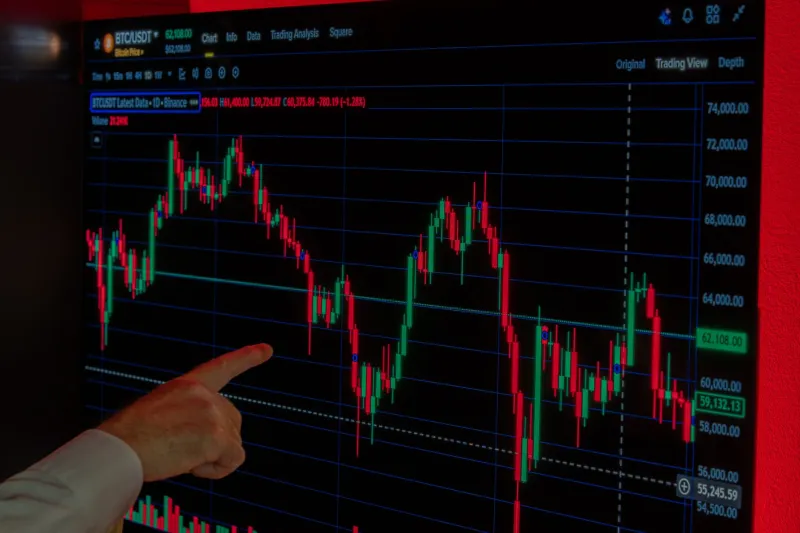
In traditional equity markets, a 2 percent intraday swing is unremarkable. In cryptocurrency markets, where 5 to 15 percent daily volatility is routine even in relatively stable conditions, high-leverage positions are not investments. They are timed charges waiting for a spark.
The compounding problem extends further. When a margin call is issued — the exchange's notification that your collateral is approaching the liquidation threshold — traders face a binary choice: deposit additional funds immediately or watch the position close. Most retail traders in this moment do not have additional funds readily available. Those who do frequently add more capital to a deteriorating position, compounding the loss rather than containing it.
The Liquidation Cascade: When Individual Losses Become Market Events
One phenomenon that distinguishes crypto margin markets from most other asset classes is the liquidation cascade — a chain reaction in which forced position closures accelerate the very price movement that triggered them.
The mechanics are straightforward. When Bitcoin drops 8 percent in an hour, leveraged long positions begin liquidating. Those liquidations require the exchange to sell the underlying asset to recover the loaned funds, which increases selling pressure, which pushes prices lower, which triggers additional liquidations. The cascade feeds itself.
During significant market events — the March 2020 COVID collapse, the May 2021 deleveraging, the November 2022 contagion following the FTX collapse — liquidation cascades wiped out hundreds of millions of dollars in leveraged positions within hours. Many of those positions belonged to traders who believed they had sufficient buffer. They did not account for the cascade effect accelerating price movement beyond any reasonable volatility estimate.
For a US-based trader managing real capital, understanding that you are not simply trading against market direction but against a reflexive liquidation mechanism is essential context.
The Psychology That Keeps Traders Returning to the Same Trap
Behavioral economics offers a precise diagnosis for why traders repeatedly engage with leverage despite the documented outcomes. Loss aversion, as defined by Kahneman and Tversky, creates an asymmetric emotional response: losses feel approximately twice as painful as equivalent gains feel rewarding. In a leveraged trading context, this dynamic produces a specific and destructive pattern.
A trader who makes 200 percent on a leveraged position experiences a powerful dopamine response. When a subsequent leveraged position moves against them, the emotional drive to recover the loss — rather than accept it — leads to increasing position size, reducing the margin buffer, or re-entering immediately after liquidation without reassessing the strategy. The technical term for this is revenge trading. The practical result is accelerated account depletion.
The accessibility of crypto derivatives platforms compounds this. Unlike futures markets in traditional finance, which require brokerage approval, margin accounts, and minimum capital thresholds, most crypto leverage platforms allow any user with a funded wallet to access high-leverage instruments within minutes. There is no cooling-off period, no suitability assessment, no friction between the emotional impulse and the execution.
A Framework for Responsible Leverage Use
None of this means leverage is categorically unusable. Professional traders and institutional desks employ leverage routinely — but within structures that the majority of retail participants never implement.
Position sizing that accounts for full liquidation risk. Before entering any leveraged position, calculate the dollar value of a complete liquidation as a percentage of your total portfolio. If liquidating this position would represent more than 1 to 2 percent of total capital, the position is too large. Leverage should amplify a small, defined risk — not concentrate the entire account into a single outcome.
Leverage ratios calibrated to asset volatility. A 10x leveraged position on Bitcoin, which routinely moves 5 to 8 percent in a single session, is categorically different from a 10x position on a lower-volatility instrument. Serious traders adjust their leverage ceiling downward as underlying volatility increases — the opposite of what most retail participants instinctively do when they perceive a strong directional move.
Hard stop-loss orders placed at account opening, not during the trade. The temptation to widen or remove stop-loss orders when a position moves against you is nearly universal and nearly always catastrophic. Setting the stop at position entry — before emotional investment in the outcome exists — is the structural defense against this pattern.
Maintaining meaningful undeployed capital. Entering a leveraged position with 100 percent of available capital eliminates all flexibility. Traders who survive extended periods using leverage consistently maintain a capital reserve capable of meeting margin calls on their largest position without requiring a liquidation decision under pressure.
Treating leverage as an occasional instrument, not a default mode. The traders who use leverage successfully tend to reserve it for high-conviction setups with clear technical confirmation, defined risk parameters, and favorable risk-to-reward ratios. They do not apply leverage to every position as a matter of habit.
The Uncomfortable Calculation
For any trader evaluating whether to incorporate margin into their strategy, one calculation is worth completing before the first leveraged trade is placed: given the leverage ratio you intend to use, how large a price move against your position would result in liquidation? Then ask how frequently that price move has occurred historically in the asset you are trading.
In most cases, the answer is sobering. The liquidation threshold is not a remote scenario. It is a routine occurrence in crypto markets, separated from any given entry point by less distance than most traders assume.
Leverage, deployed with discipline, can serve a legitimate function in a sophisticated trading strategy. But the discipline required is not modest. It demands position sizing precision, volatility awareness, emotional detachment, and structural risk controls that most participants never implement.
The 90 percent who blow up their accounts are not uniformly unsophisticated. Many understand the mechanics perfectly well. What separates them from the minority who survive is not knowledge — it is the willingness to subordinate the excitement of potential gain to the unglamorous work of managing the downside first.