Chasing the Dip: How Retail Investors Mistake Temporary Pullbacks for Opportunity and Pay the Ultimate Price
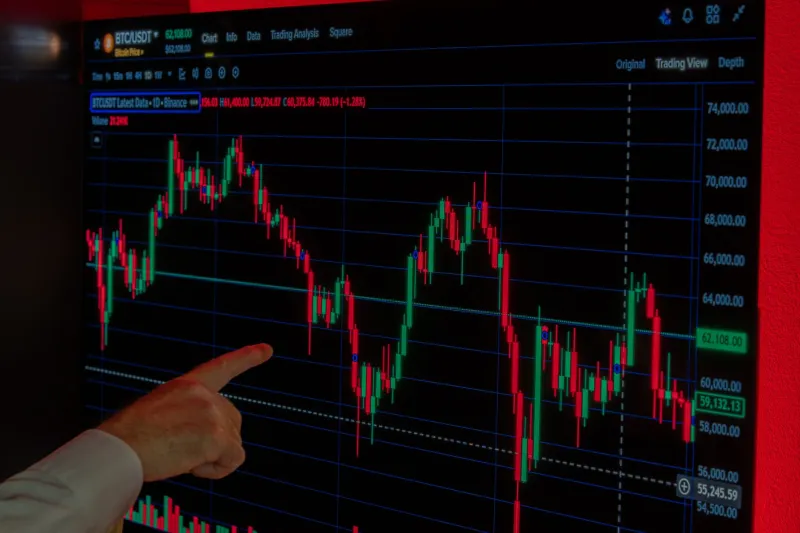
There is a phrase repeated so often in crypto communities that it has achieved the status of folk wisdom: buy the dip. It appears in Discord servers, on financial Twitter threads, and in the comment sections of every major price drop. It sounds disciplined. It sounds contrarian. It sounds, above all, like the move a sophisticated investor would make.
The data tells a different story.
Across multiple market cycles, retail participants who deployed capital into what they perceived as a temporary pullback frequently found themselves holding positions through a 60, 70, or even 80 percent drawdown — not because they lacked conviction, but because they misread the nature of the decline entirely. The dip they bought was not a dip at all. It was the opening act of a prolonged bear market.
Understanding why this happens — and how to protect yourself from it — is one of the most consequential skills a crypto investor can develop.
The Psychology Behind the Trade
Human beings are wired to perceive a lower price as a better deal. When Bitcoin trades at $45,000 after touching $65,000, the brain registers a 30 percent discount and begins constructing a narrative around value. This cognitive shortcut, known in behavioral economics as anchoring, causes investors to fixate on a prior high as a reference point rather than evaluating the asset on its current merits and market context.
Compounding this is the phenomenon of loss aversion. Investors who sat out the prior rally feel a sharp psychological sting when prices fall — not because they lost money, but because they perceive a missed opportunity. That emotional pressure pushes them toward action precisely when caution is warranted. The desire to participate, to not miss the recovery, overrides rational risk assessment.
Social proof accelerates the error. When influential voices in crypto communities announce they are "loading up" during a decline, it creates a permission structure for less experienced investors to follow. The herd mentality that drives prices to unsustainable highs during bull markets operates just as powerfully — and just as destructively — on the way down.
Healthy Corrections vs. Structural Reversals: The Distinction That Matters
Not every price decline is a warning sign. Crypto markets are inherently volatile, and pullbacks of 15 to 25 percent within an ongoing bull trend are historically common and frequently precede renewed upward momentum. The critical skill is distinguishing between these routine corrections and the early stages of a genuine trend reversal.
Several technical and on-chain indicators provide meaningful context.
Volume behavior is among the most reliable early signals. In a healthy correction within a bull market, declining prices typically occur on relatively low volume, suggesting limited conviction among sellers. When a decline is accompanied by sustained, elevated volume — particularly if that volume is concentrated in large transactions — it often reflects institutional distribution rather than routine profit-taking.
Moving average structure offers another lens. As long as price remains above key long-term moving averages, such as the 200-day moving average, the broader trend remains intact. A confirmed close below this level, especially on high volume, has historically preceded extended bear phases across multiple Bitcoin and altcoin cycles.
On-chain metrics, including exchange inflows, realized profit and loss data, and the behavior of long-term holders, provide additional signal. When long-term holders — wallets that have accumulated over extended periods — begin moving coins to exchanges in meaningful quantities, it suggests that sophisticated participants are reducing exposure. Retail investors interpreting this price decline as a buying opportunity are, in effect, absorbing the supply that experienced participants are offloading.
The Historical Record Is Not Ambiguous
Look at the 2017 to 2018 cycle. Bitcoin peaked near $20,000 in December 2017. Over the following weeks, it experienced several pullbacks of 20 to 30 percent, each of which attracted enthusiastic buying from retail participants convinced the bull market was merely pausing. By December 2018, the price had settled near $3,200 — an 84 percent decline from the peak.
A similar pattern played out following the 2021 cycle high. After Bitcoin reached approximately $69,000 in November 2021, a series of declining bounces kept optimism alive well into 2022. Each recovery attempt drew fresh capital from investors certain the bottom was in. The eventual trough arrived near $15,500 in late 2022 — a drawdown exceeding 77 percent.
In both instances, the investors who suffered the greatest losses were not those who sold at the top and missed the recovery. They were the ones who bought repeatedly on the way down, averaging into a position that continued to deteriorate.
A Framework for Disciplined Entry That Does Not Require Predicting the Bottom
The solution is not to avoid buying during downturns altogether — some of the most advantageous long-term entry points occur during bear markets. The solution is to replace guesswork with a structured, rules-based approach.
Define your entry criteria before the market moves. Establish in advance the specific conditions under which you will deploy capital. These conditions might include a confirmed recovery above a key moving average, a shift in on-chain accumulation data, or a reduction in exchange inflows over a defined period. By setting these criteria when you are emotionally neutral, you remove the in-the-moment pressure that leads to impulsive decisions.
Allocate in tranches, not all at once. Rather than committing a full position at what you believe to be the bottom, divide your intended allocation into three to five equal portions and deploy them at predetermined intervals or price levels. This approach, sometimes called systematic accumulation, ensures that a continued decline does not exhaust your available capital before conditions genuinely improve.
Respect the macro trend. Individual entry points matter far less than the broader market environment in which you are operating. Deploying capital aggressively into a confirmed downtrend — regardless of how compelling the short-term setup appears — places the probability structure against you. Patience is not passivity; it is the recognition that the market will present better-defined opportunities once the direction clarifies.
Size positions according to risk, not conviction. The strength of your belief that a bottom is near should have no bearing on how much capital you commit. Position sizing should be determined by the maximum loss you are prepared to absorb if the trade moves against you. Conviction without risk management is simply speculation.
The Real Cost of the Trap
Buying the dip is not inherently a flawed concept. Systematic accumulation during periods of genuine undervaluation has historically rewarded patient, disciplined investors. The trap lies in the conflation of declining price with undervaluation — a confusion that has cost American retail investors billions of dollars across successive crypto cycles.
The investors who consistently navigate volatile markets are not those who possess superior market-timing ability. They are those who have built a framework that does not require it. They define their conditions, manage their exposure, and remain willing to wait — even when every instinct is urging them to act.
At King88 Crypto, our perspective is straightforward: the market rewards those who trade smarter, not those who trade more frequently. Before you deploy capital into the next pullback, ask yourself whether you are making a disciplined investment decision — or simply responding to the oldest psychological trap in the market.