Stability Is a Lie: The Hidden Costs of Parking Your Crypto in Stablecoins
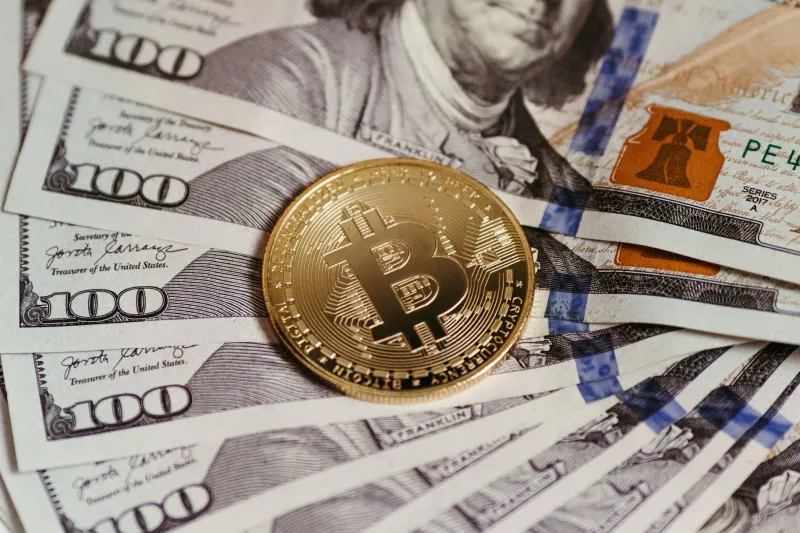
There is a particular comfort that comes with moving funds into a stablecoin. The volatility stops. The portfolio value holds steady on the screen. For a moment, it feels like the market cannot touch you. That feeling, however comforting, is one of the most expensive illusions in digital asset investing.
Stablecoins — tokens pegged to the US dollar or other reserve assets — have become the default resting place for traders between positions. Billions of dollars sit in USDT, USDC, DAI, and their counterparts at any given moment, waiting for the next entry point. What most holders fail to examine is the quiet erosion happening while they wait. The stability is real in one narrow sense: the price rarely moves. But wealth is not just a number on a screen. Measured against inflation, counterparty risk, and opportunity cost, a stablecoin balance can shrink meaningfully without a single digit changing.
The Inflation Problem Nobody Talks About
The Federal Reserve's extended period of elevated interest rates has made this issue more visible, though it existed long before. When the US inflation rate runs at 3.5 percent annually and a stablecoin generates no yield, a trader holding $50,000 in USDT for six months has effectively lost purchasing power equivalent to roughly $875. That loss does not appear as a red number on any exchange dashboard. It is invisible — which is precisely what makes it dangerous.
Some platforms offer yield on stablecoin deposits, and this has become a selling point across centralized exchanges and DeFi protocols alike. But yield introduces its own category of risk. When a platform offers 8 or 10 percent annual percentage yield on a dollar-pegged token, the question every trader should ask is: where is that yield coming from? In traditional finance, yield reflects risk. The same principle applies in crypto — often with considerably higher stakes.
Centralized Stablecoins: The Counterparty Risk You Are Accepting
Tether (USDT) and USD Coin (USDC) dominate stablecoin volume in the United States. Both are centralized: a company holds reserves, issues tokens, and promises redemption at one dollar per token. That promise is only as good as the company behind it and the quality of its reserves.
Tether's reserve composition has been a subject of regulatory scrutiny and public debate for years. The company has at various points held commercial paper, secured loans, and other instruments that are not equivalent to cash. In a stress scenario — a sudden, large-scale demand for redemption — the liquidation of those reserves could create slippage, delays, or worse. The 2023 banking crisis, which briefly caused USDC to depeg after Circle disclosed exposure to Silicon Valley Bank, offered a real-world preview of how quickly centralized stablecoin confidence can fracture.
For US-based traders, the regulatory dimension adds another layer. Stablecoin issuers operate in a legislative gray zone that Congress has been attempting to resolve for several sessions. A regulatory change that freezes assets, mandates reserve restructuring, or forces operational changes could affect redemption timelines in ways that are difficult to predict and impossible to hedge against if capital is already sitting inside the token.
Algorithmic Stablecoins: A Category That Has Already Proven Its Danger
If centralized stablecoins carry counterparty risk, algorithmic stablecoins — those that maintain their peg through code-based mechanisms rather than direct collateral — have demonstrated something closer to existential risk. The collapse of TerraUSD (UST) in May 2022 erased approximately $40 billion in value within days. The mechanism that was supposed to maintain the peg became the engine of its destruction under redemption pressure.
That event did not eliminate algorithmic stablecoins from the market. Several projects continue to operate on modified models. What it established, beyond any reasonable dispute, is that an algorithmic peg is a theoretical construct that has not survived extreme market conditions. Traders who parked capital in UST because it offered high yields and appeared stable learned, at extraordinary cost, that appearance and reality are not the same thing.
The lesson extends beyond UST specifically. Any stablecoin whose peg relies primarily on market incentives and tokenomic mechanisms — rather than segregated, audited, liquid collateral — carries a category of risk that the word 'stable' does not adequately communicate.
Evaluating Yield: When the Return Is the Risk
DeFi protocols offering stablecoin yields present a more nuanced challenge. Some of the yield generated in these environments is legitimate: it derives from lending activity, liquidity provision fees, or protocol revenue. Some of it is not — it is subsidized by token emissions that dilute value elsewhere, or by leverage structures that amplify systemic fragility.
A trader evaluating a stablecoin yield opportunity should examine several factors before committing capital. First, the source of the yield: is it derived from real economic activity or from token inflation? Second, the smart contract risk: has the protocol been audited, and by whom? Third, the liquidity conditions: under what circumstances could withdrawal be delayed or restricted? Fourth, the collateralization model: what happens to the stablecoin's peg if the underlying collateral drops sharply in value?
These are not abstract questions. They are the difference between a productive capital resting place and a trap dressed in the language of safety.
A Framework for Smarter Capital Parking
None of this means stablecoins have no role in a crypto portfolio. They remain useful instruments for managing volatility, holding dry powder between trades, and navigating uncertain market conditions. The error is not using them — it is using them without understanding what you are holding.
For traders seeking genuinely lower-risk capital parking, several principles apply. Favor stablecoins backed by transparent, regularly audited reserves held in segregated accounts. USDC, despite its SVB moment, has generally maintained stronger transparency standards than Tether and has been more cooperative with regulatory oversight. On-chain collateralized stablecoins like DAI, backed by over-collateralized crypto assets, offer a different risk profile — one that is more transparent but also more sensitive to collateral volatility.
Diversify across stablecoin types rather than concentrating in a single issuer. Consider the duration of the hold: short-term parking carries different risk tolerances than capital sitting idle for months. For longer holding periods, compare stablecoin yields against Treasury bill rates, which have been historically competitive in recent years and carry considerably less counterparty risk.
Finally, account for inflation explicitly. Build it into your return calculations. If a trade setup requires waiting three months for an entry, factor the real cost of that wait into your position sizing and expected return. Invisible losses are still losses.
The Discipline of Honest Accounting
The broader lesson here connects to something King88 Crypto has emphasized across its investment strategy coverage: serious trading requires honest accounting of every position, including the ones that feel safe. Capital at rest is not neutral. It is either working for you, losing purchasing power, or accumulating risks that are not yet visible.
Stablecoins will continue to serve a function in the digital asset ecosystem. But treating them as consequence-free holding pens is a habit that compounds quietly and painfully over time. The traders who outperform over multiple market cycles are those who understand the cost of every decision — including the decision to do nothing.