Disorder as Opportunity: How Elite Crypto Traders Profit from the Volatility That Destroys Everyone Else

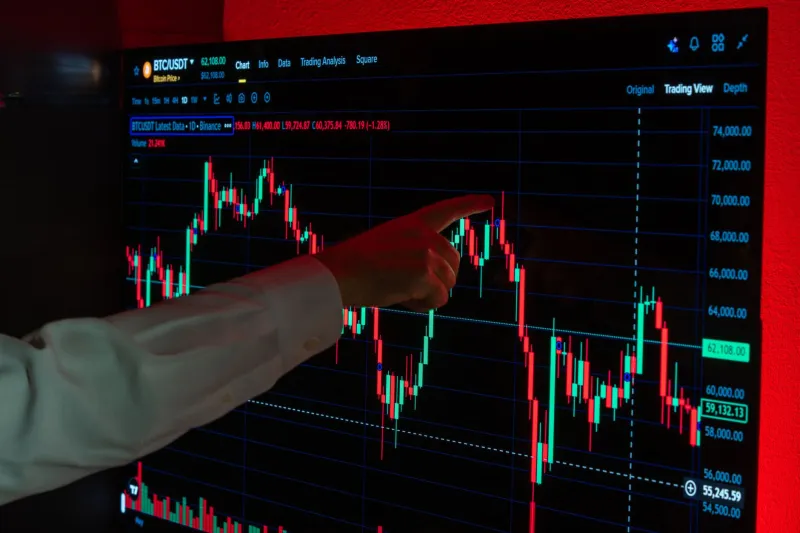
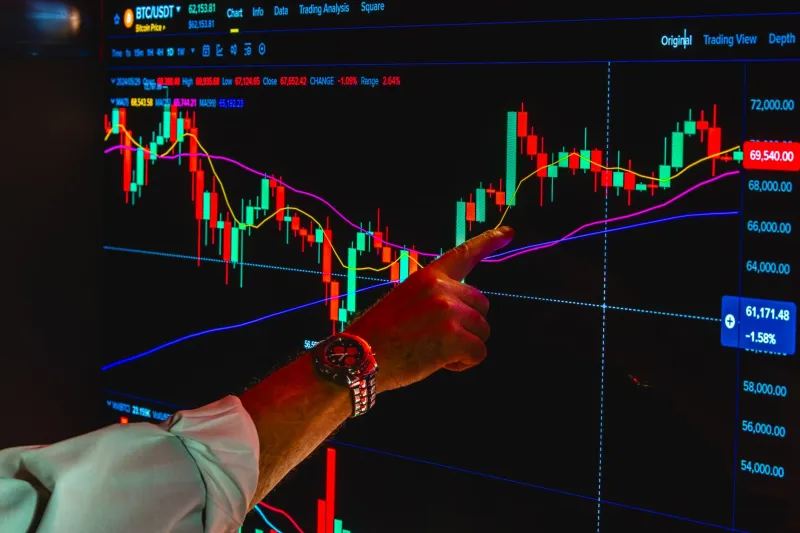
Photo: cryptocurrency market volatility trading chart price swings, via img.freepik.com
There is a persistent myth circulating among American retail investors that the ideal market is a calm one — steady, predictable, and free from the stomach-dropping swings that define cryptocurrency. This belief is not only incorrect; it is actively expensive. The traders who have built durable, compounding wealth in digital assets did not do so by finding tranquil waters. They built systems designed to harvest energy from storms.
Volatility, properly understood, is not risk in its raw form. It is compressed opportunity — price displacement that creates entry points, momentum windows, and asymmetric setups that simply do not exist in low-movement environments. The question is never whether volatility is present. In crypto, it always is. The question is whether a trader has the tools and temperament to convert that displacement into realized gains.
Understanding Volatility Through the Right Lens
In traditional equity markets, the CBOE Volatility Index — commonly known as the VIX — serves as the primary gauge of expected market turbulence. Crypto markets have developed their own equivalents. The Bitcoin Volatility Index (BVIX) and the Crypto Volatility Index (CVI), which operates on-chain and derives its readings from options market data, function as analogous instruments for digital asset traders.
When the CVI spikes above 100 — a level it has reached during events like the FTX collapse, the Terra/LUNA implosion, and the March 2020 COVID liquidity crisis — the instinct for most investors is to retreat. Experienced traders read that same spike as a signal that the options market is pricing in fear, that implied volatility has outpaced realized volatility, and that mean reversion setups are beginning to mature.
This inversion of conventional logic is central to trading volatility rather than fearing it. High implied volatility means inflated option premiums. For traders who sell volatility through structured options strategies, elevated fear in the market translates directly into enhanced income.
The Technical Setups That Thrive in Turbulent Conditions
Not every technical pattern performs equally across market conditions. Several setups are specifically engineered to extract value during high-volatility environments.
Bollinger Band Expansion Plays When Bollinger Bands — which measure price relative to a rolling standard deviation — expand sharply after a period of compression, they signal a volatility breakout. The direction of that breakout, confirmed by volume and momentum indicators like the Relative Strength Index (RSI), defines the trade. Experienced traders do not guess the direction before the expansion; they wait for the expansion to declare itself, then position aggressively in the confirmed direction.
Volatility-Adjusted Mean Reversion During periods of extreme price dislocation — say, a 20% single-day drawdown on a major altcoin — assets frequently overshoot their fair value anchors. Traders who use the Average True Range (ATR) to calibrate position sizing can enter mean reversion trades with statistically favorable risk-reward profiles. The key is identifying when price has moved a statistically improbable distance from its moving average, then structuring a position that survives further short-term movement while targeting the inevitable reversion.
Funding Rate Arbitrage in Perpetual Futures On exchanges offering perpetual futures contracts — a dominant trading instrument in the US crypto derivatives market — funding rates become extremely distorted during volatile periods. When the market is aggressively long, long positions pay funding to shorts. When panic drives mass short positioning, shorts pay longs. Traders who monitor funding rate extremes and position against the crowded trade can collect both the funding payment and the price appreciation as the crowded position is eventually unwound.
The Psychological Architecture Required
Technical proficiency alone does not produce profits during volatile markets. The psychological demands of trading through extreme price swings are severe, and most retail participants fail not because their analysis was wrong but because their emotional responses overrode their systems.
The core psychological requirement is what behavioral finance researchers call process anchoring — the ability to evaluate decisions based on the quality of the process rather than the outcome of any single trade. A trader who exits a position prematurely because a 15% drawdown felt unbearable has failed at process, even if the market eventually validated the original thesis. Conversely, a trader who held through that drawdown because the technical setup remained intact succeeded at process, regardless of whether the trade ultimately closed profitably.
Developing this orientation requires deliberate practice. Many professional traders maintain a structured trade journal that documents not just entries and exits, but the emotional state and reasoning at each decision point. Over time, this journal becomes a feedback mechanism that separates emotional interference from disciplined execution.
A second critical psychological element is asymmetric thinking. Most retail investors frame volatile markets in terms of what they stand to lose. Elite traders frame every volatile setup in terms of the ratio between the potential loss if wrong and the potential gain if right. A setup that risks $500 to make $2,000 remains attractive even if it succeeds only 40% of the time — the mathematics favor participation. Volatile markets generate more of these asymmetric opportunities than any other market condition, which is precisely why experienced traders welcome turbulence.
Position Sizing as a Volatility Management Tool
One of the most underappreciated instruments in a volatile market is disciplined position sizing. The Kelly Criterion — a mathematical formula that calculates the optimal fraction of capital to deploy based on edge and win rate — argues for reduced position sizes as volatility increases. This is counterintuitive to traders who feel that larger swings demand larger bets to generate meaningful returns.
The reality is the opposite. In high-volatility conditions, even well-constructed trades carry elevated short-term drawdown risk. A position that is too large relative to account equity can trigger a forced exit — either psychologically or through a margin call — before the thesis has time to resolve. Scaling position size down during volatile periods preserves the ability to participate in multiple setups, any one of which might deliver outsized returns.
Volatility Is the Engine — Discipline Is the Transmission
The crypto market's volatility is not a design flaw. It is an emergent property of a 24-hour, globally accessible, sentiment-driven asset class that is still in its early institutional adoption phase. That volatility will moderate over time as market structure matures. But for traders operating in the current environment, it remains the single most powerful source of alpha available.
The traders who extract consistent value from that volatility share a common profile: they use quantitative volatility indicators to identify opportunity windows, they deploy technical setups calibrated for high-movement conditions, they manage position size with mathematical precision, and they have built psychological frameworks that treat market chaos as a professional advantage rather than a personal threat.
At King88 Crypto, the guiding principle is straightforward: the market rewards those who prepare for conditions others flee. Volatility is not the obstacle between a trader and their goals. For those who have done the work, it is the path.